Split views and multiple cursors
Find and replace, formatters, Markdown and HTML previews, themes, and icon packs. The editor is CodeMirror, tuned for long sessions.


v0.3.0 alpha · MIT licensed · Open source
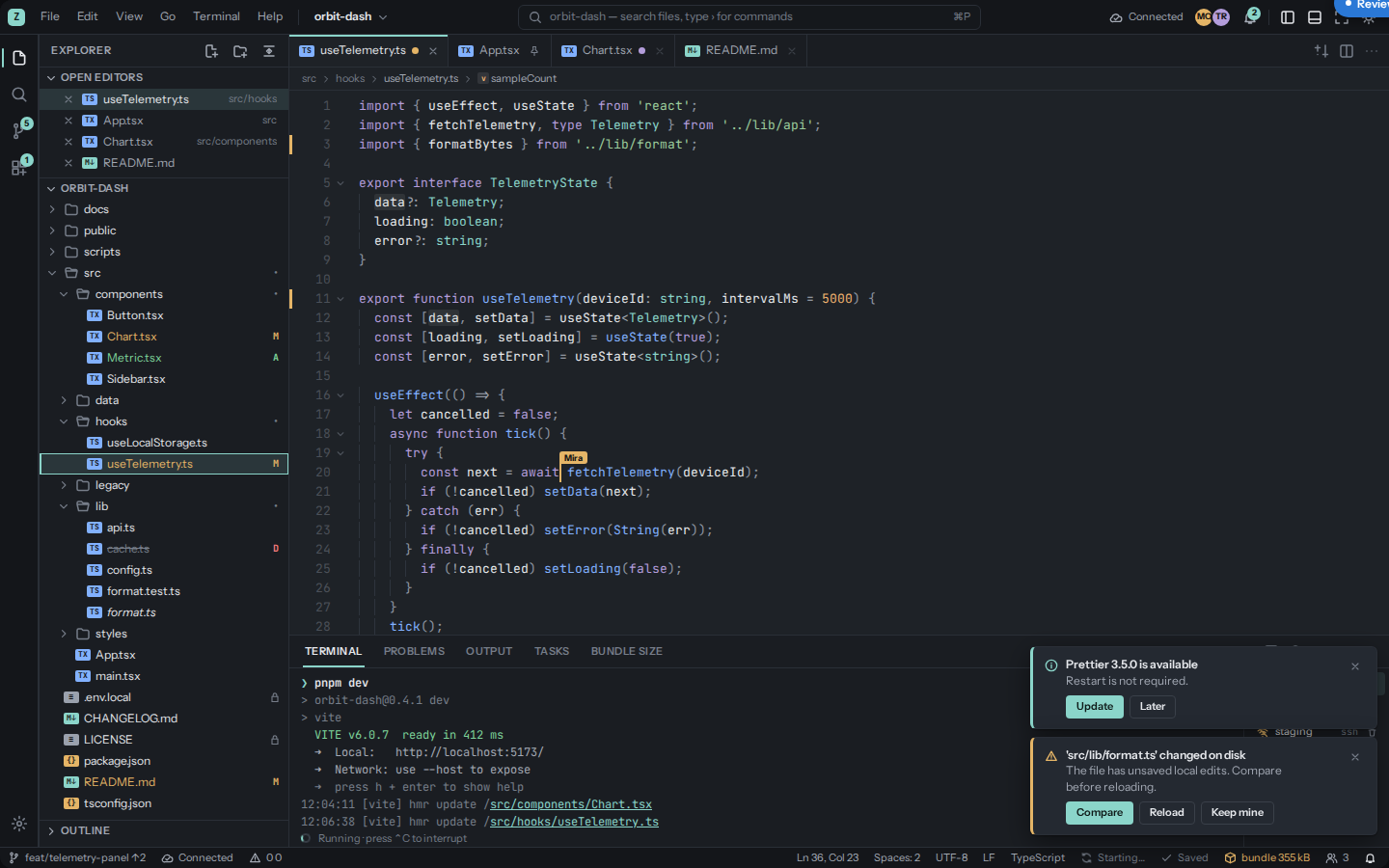
Oxbit is built with React and CodeMirror. It runs in a browser, on macOS and Linux, and on iPhone and iPad. Connect the Node runtime for files, terminals, Git, tasks, language services, and collaboration.
curl -fsSL https://oxbit.dev/install.sh | bash
Features
Find and replace, formatters, Markdown and HTML previews, themes, and icon packs. The editor is CodeMirror, tuned for long sessions.
Completion, diagnostics, navigation, and formatting in trusted runtime workspaces.
Staging, commits, history, branches, remotes, stashes, and merge recovery.
Import project commands. Run services, dependencies, and worktree lifecycle hooks.
Revocable collaboration grants. Tool trust and access grants have separate controls.
Browser workspaces persist files, settings, layout, and drafts in IndexedDB. Runtime workspaces check revisions before saving, preserve drafts, and reconnect surviving terminals. Commands with uncertain outcomes are not repeated automatically.
Platforms
The same workbench in a browser tab, in a native desktop window, and on an iPad next to your coffee.
Open a directory with browser directory access, or pair with a runtime for files on disk. Nothing to install.
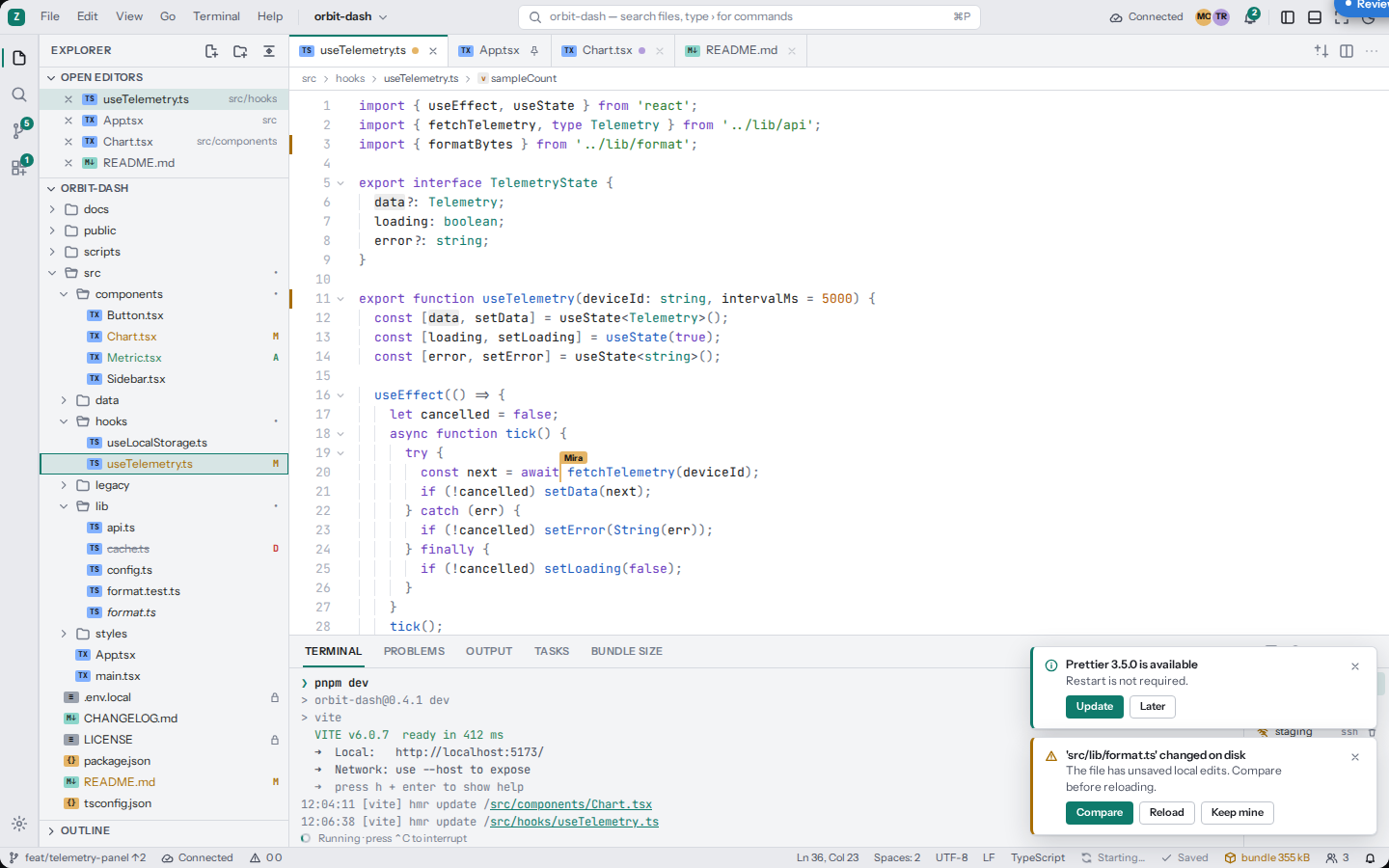
The Tauri desktop app bundles Node, ripgrep, the terminal addon, and managed language services. Connect over SSH opens a remote folder; the host does not need Node.
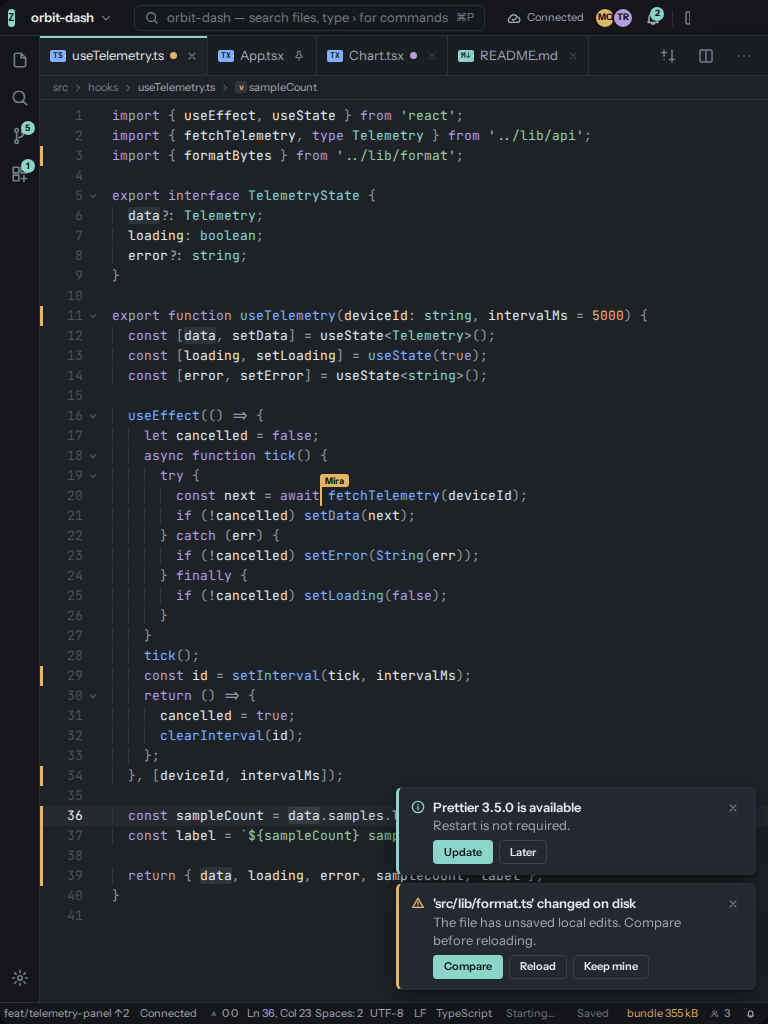
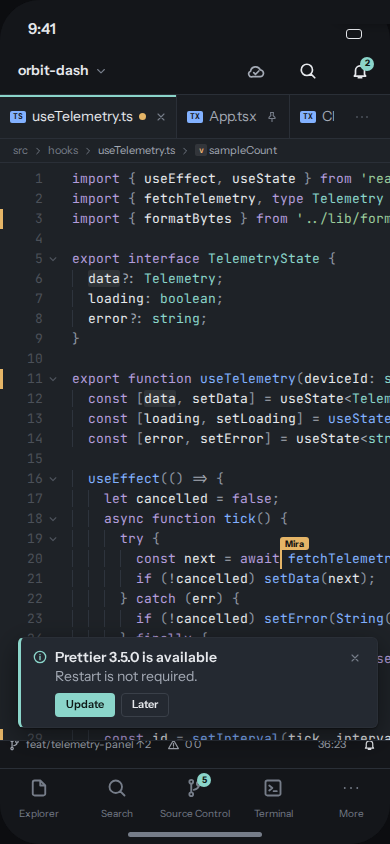
Edit the app's Documents folder or folders from Files. Connect to a runtime on another computer for terminals, Git, tasks, and language services. Pairing credentials live in Keychain.
Join TestFlightRuntime
oxbit starts a runtime, opens the editor in your browser, and returns to the shell.
Run it again in the same project and it reuses the runtime. The printed URL carries a pairing code
that the editor consumes and removes from the address bar.
oxbit ~/code/appoxbit src/main.tsoxbit --statusoxbit --stopoxbit --desktopExtensions
Use Codex ACP, Cursor ACP, or Amp Agent ACP in a trusted runtime workspace. Conversation history, editor context, permission controls, diff review, and subagent tracking. Disabled by default; enable it in Extensions.
Register commands, panels, settings, status items, output channels, and document views. The Bundle Inspector example ships in the repo.
import type { Extension } from '@oxbit/sdk';

export default {
  manifest: {
    manifestVersion: 1,
    id: 'example.hello',
    version: '1.0.0',
    sdk: '^1.0.0',
    activation: ['onCommand:hello.show'],
  },
  activate(ctx) {
    ctx.commands.register({
      id: 'hello.show',
      title: 'Hello: Show',
      run: () => 'Hello',
    });
  },
} satisfies Extension;
Quick start
On macOS or Linux, install Node 24, Bun 1.4.2, Git, and ripgrep. Then:
oxbit in any projectcurl -fsSL https://oxbit.dev/install.sh | bash
oxbit ~/code/my-project